

Precision Pigment Control Technology
Advanced Depigmenting Science Designed To Target Hyperpigmentation At The Source
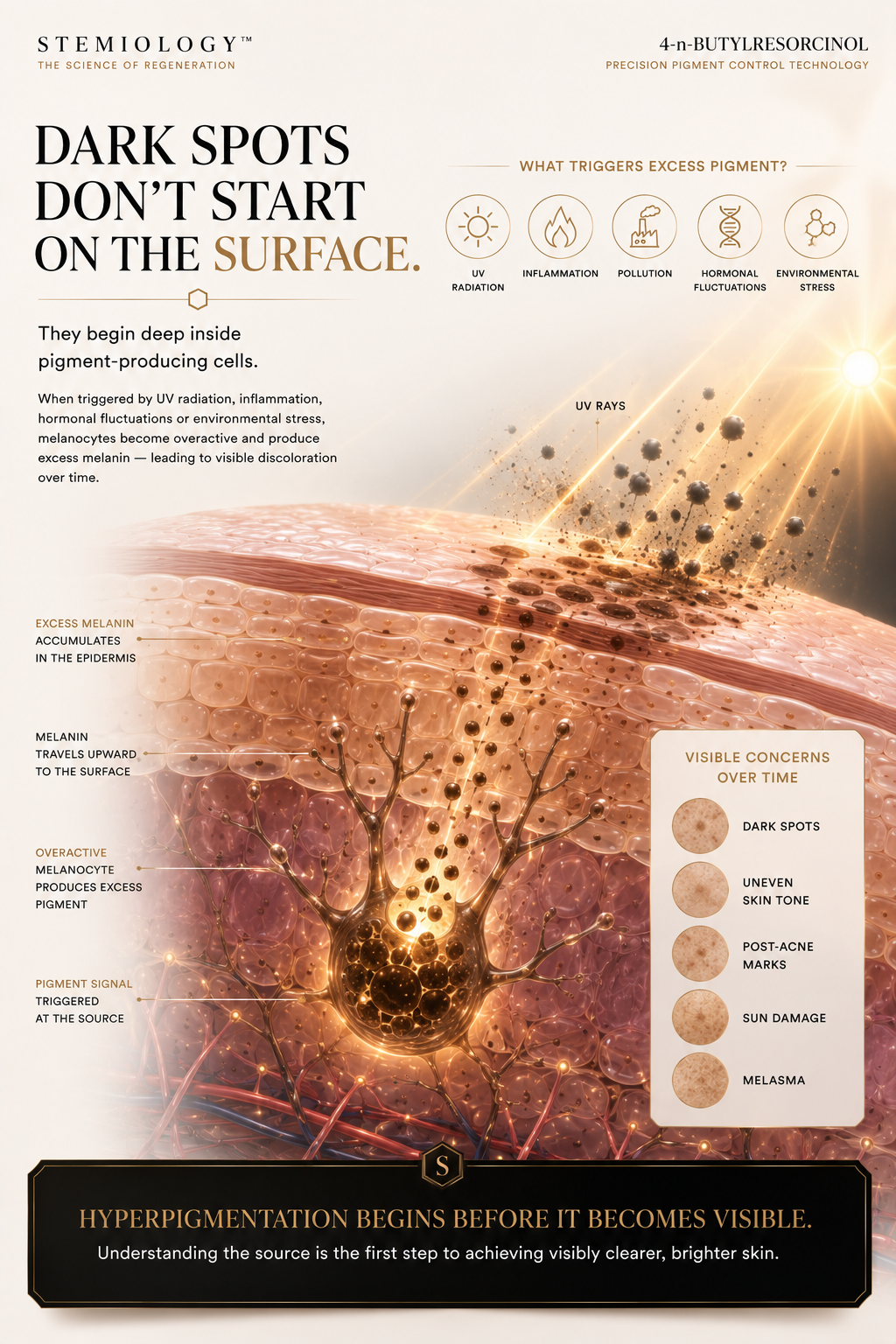
Skin pigmentation begins deep within specialized cells called melanocytes.
When exposed to UV radiation, inflammation, hormonal fluctuations, environmental stressors, or post-acne skin damage, these cells can become overactive and produce excess melanin.
Over time, this excess pigment can accumulate and appear as:
- Dark Spots
- Uneven Skin Tone
- Post-Acne Marks
- Sun Damage
- Melasma
4-Butylresorcinol was developed to address these biological pathways by targeting key enzymes involved in melanin production, helping support a brighter, more even-looking complexion.
The Science Behind 4-Butylresorcinol
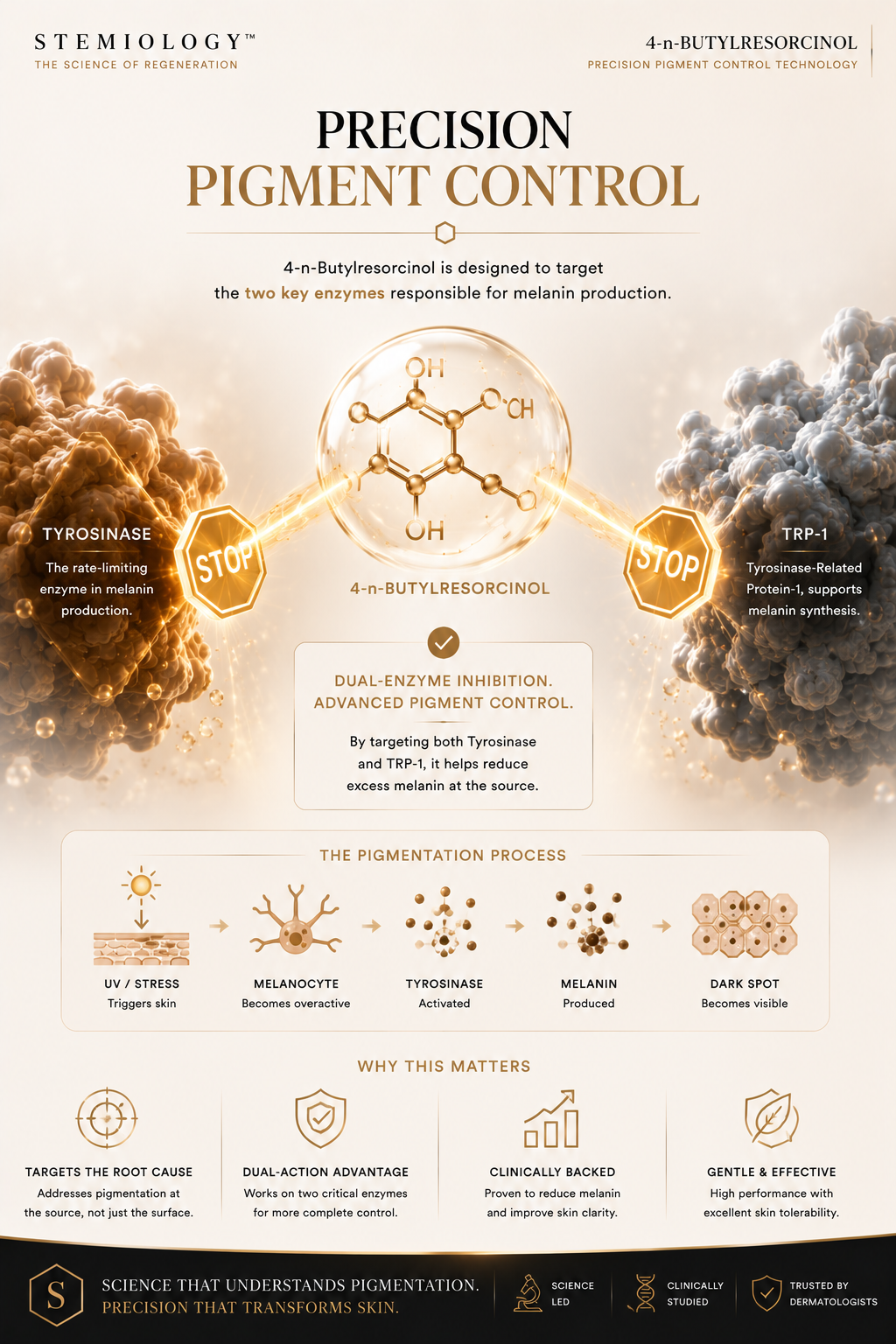
Unlike traditional brightening ingredients that focus on a single pathway, 4-Butylresorcinol was designed to work through a dual-action mechanism.
Research has demonstrated that 4-Butylresorcinol inhibits:
Tyrosinase
Tyrosinase-Related Protein-1 (TRP-1)
These two enzymes play a central role in the skin’s pigment production process and are responsible for converting amino acids into melanin pigments.
How 4-Butylresorcinol Works
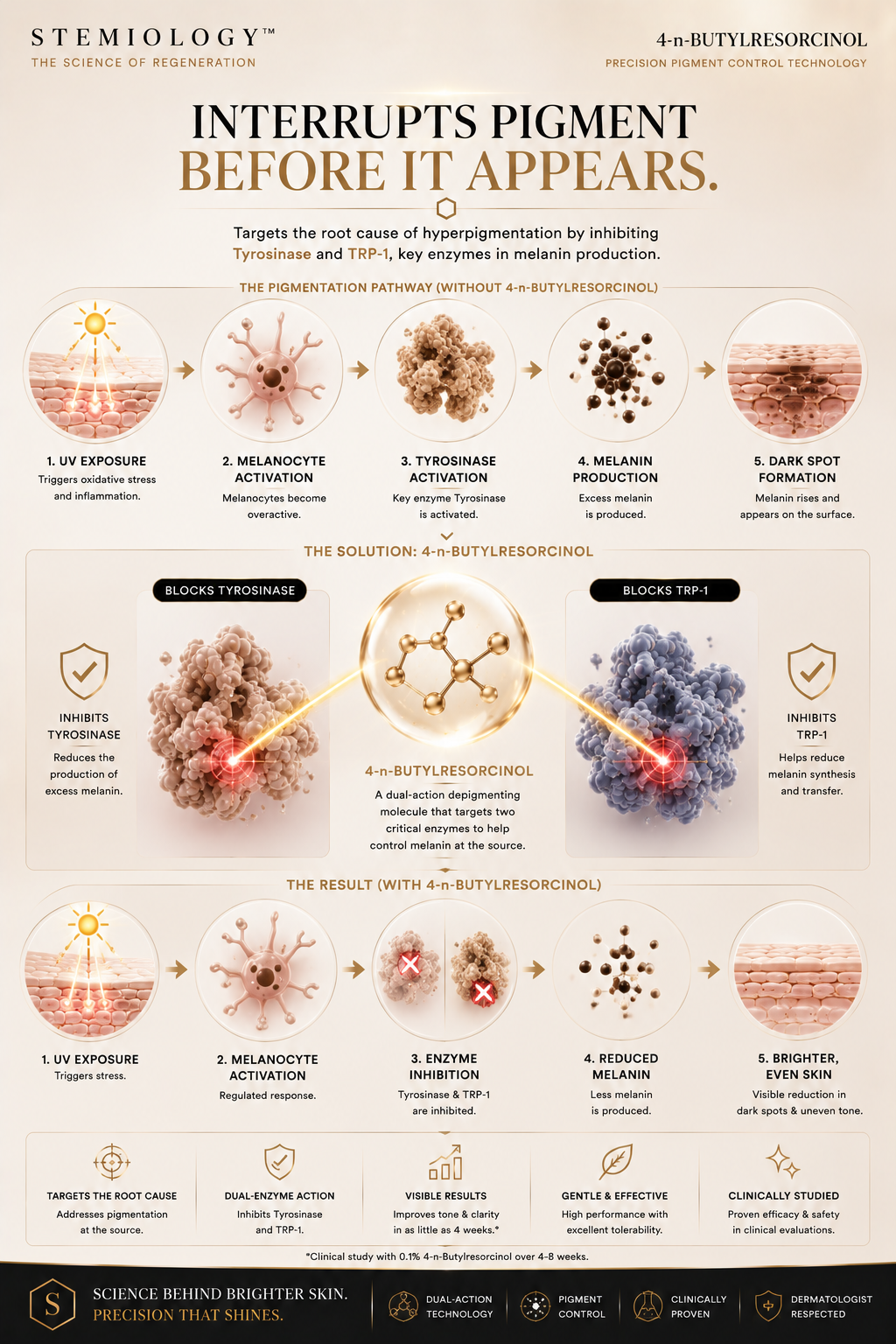
Targets Excess Melanin Production
Tyrosinase is widely recognized as the rate-limiting enzyme in melanogenesis.
By helping reduce tyrosinase activity, 4-Butylresorcinol supports a reduction in excess melanin formation, helping improve the appearance of visible discoloration over time.
Supports Multiple Pigmentation Pathways
Most brightening ingredients focus on only one target.
4-Butylresorcinol also inhibits Tyrosinase-Related Protein-1 (TRP-1), providing a broader approach to pigmentation management and helping support a more uniform skin tone.
Advanced Dermatological Performance
Laboratory studies demonstrated stronger tyrosinase inhibition compared with several traditional depigmenting ingredients including hydroquinone, kojic acid and arbutin.
This is one reason why 4-Butylresorcinol has become one of the most respected ingredients in modern pigmentation-focused skincare.
Clinically Studied Results
Visible Improvement In As Little As 4 Weeks
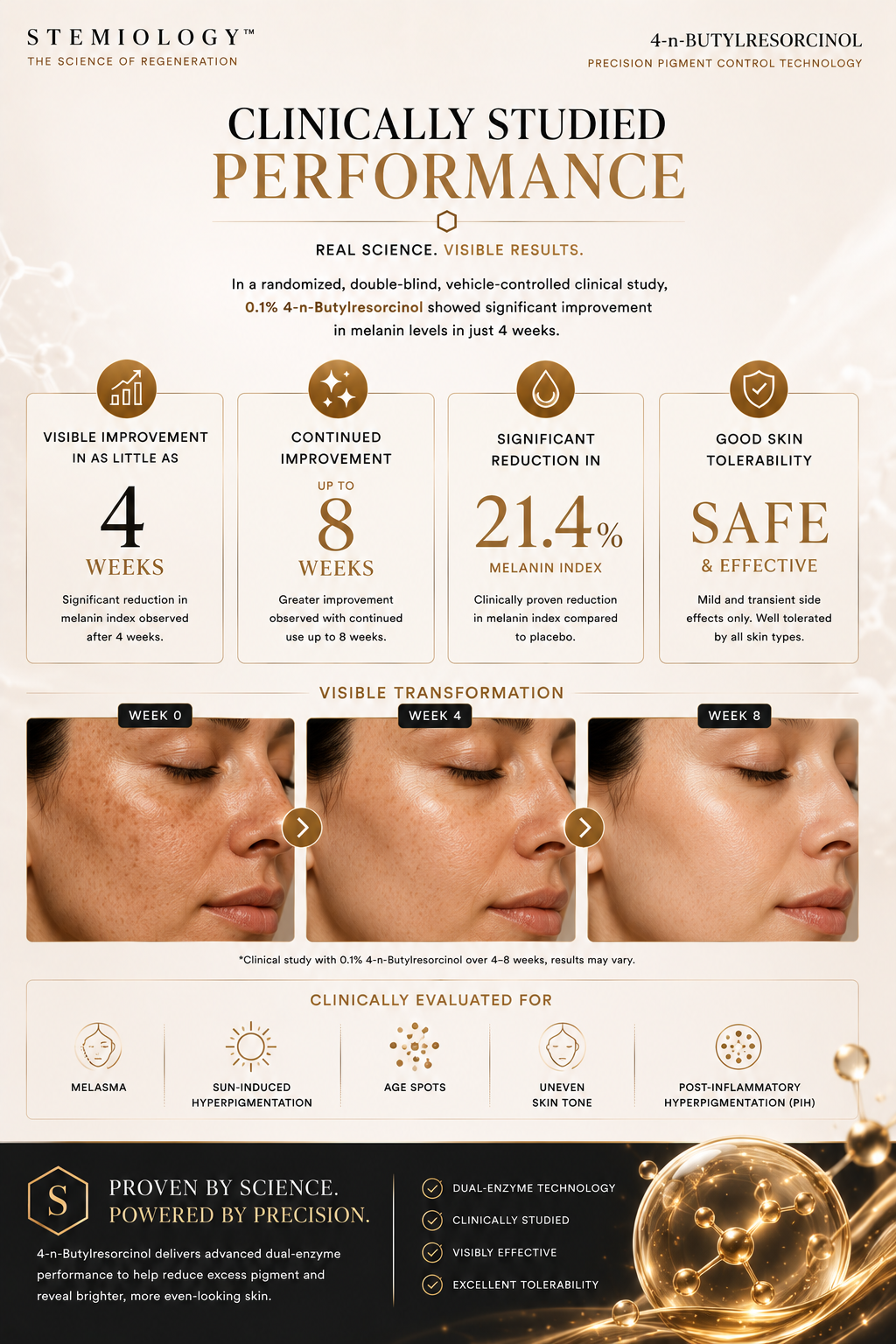
In a randomized, double-blind, vehicle-controlled clinical study, participants using 0.1% 4-Butylresorcinol experienced significant reductions in melanin levels after 4 weeks, with further improvements observed after 8 weeks.
Results demonstrated:
- Significant reduction in melanin index
- Continued improvement through 8 weeks
- Good skin tolerability
- Mild and transient side effects only
Designed For Stubborn Pigmentation Concerns
Clinical studies have evaluated 4-Butylresorcinol in:
- Melasma
- Sun-Induced Hyperpigmentation
- Age Spots
- Uneven Skin Tone
- Post-Inflammatory Hyperpigmentation (PIH)
Why STEMIOLOGY™ Uses 4-Butylresorcinol
At STEMIOLOGYTM, we select ingredients based on biological precision, scientific evidence and clinical relevance.
4-Butylresorcinol stood out because it focuses on one of the most important mechanisms in pigmentation science:
Dual-Enzyme Melanin Control
Rather than temporarily masking discoloration, 4-Butylresorcinol was developed to target the biological pathways involved in excess pigment production.
Its advanced dual-action mechanism, clinical validation and modern dermatological relevance make it one of the cornerstone technologies within the STEMIOLOGYTM Brightening & Pigmentation Correction System.
STEMIOLOGY™ Scientific Perspective
Hyperpigmentation is not simply a cosmetic concern.
It is the visible result of biological signaling pathways that regulate melanin production.
By targeting both Tyrosinase and TRP-1, 4-Butylresorcinol represents a next-generation approach to supporting clearer, brighter and more even-looking skin.