
Plant Exosomes vs Human Exosomes: Are They Safe?
Your skin doesn’t age in years. It ages in cellular decisions — thousands of them, every single day.
The question is who gets to influence those decisions. And in 2026, the most contested answer in skincare is a particle you cannot see, cannot feel, and are increasingly being asked to trust.
Exosomes have arrived. They appear on clinic menus, in luxury serum launches, in Reddit threads written at 2 a.m. by people who have read three studies and one press release. What almost nobody is explaining is that the word “exosome” describes a delivery mechanism — not a source, not a safety profile, and certainly not a guarantee.
Two products can both say “exosome.” One may be a cosmetic ingredient manufactured under standard regulatory oversight. The other may be a biological material derived from human tissue, sitting in a regulatory space that no country has fully resolved. The label does not distinguish between them. This article will.
What an Exosome Actually Is
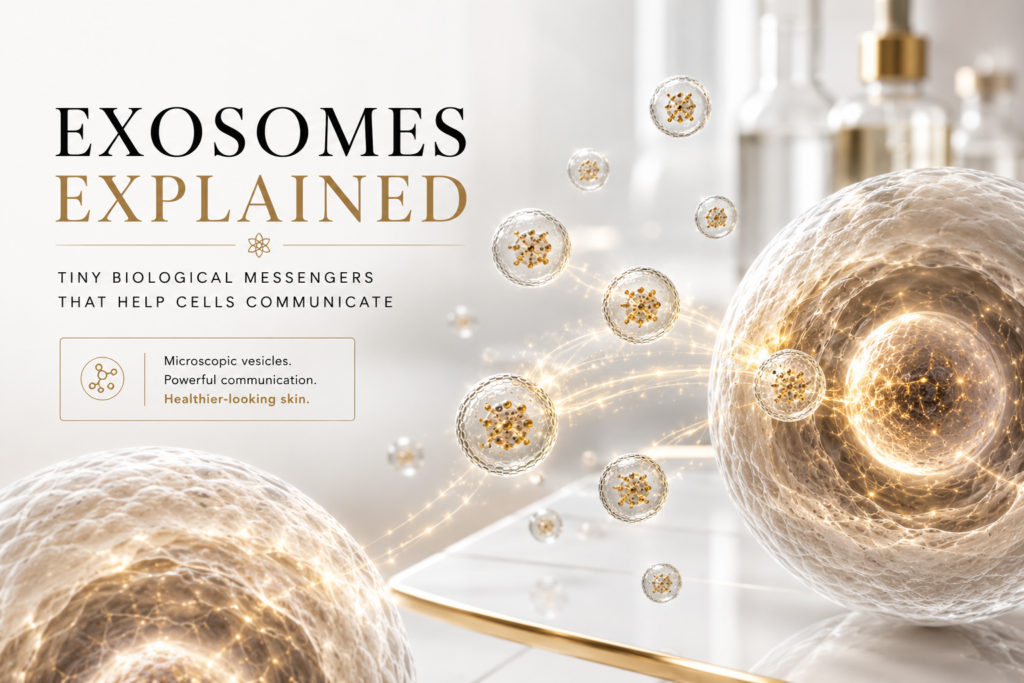
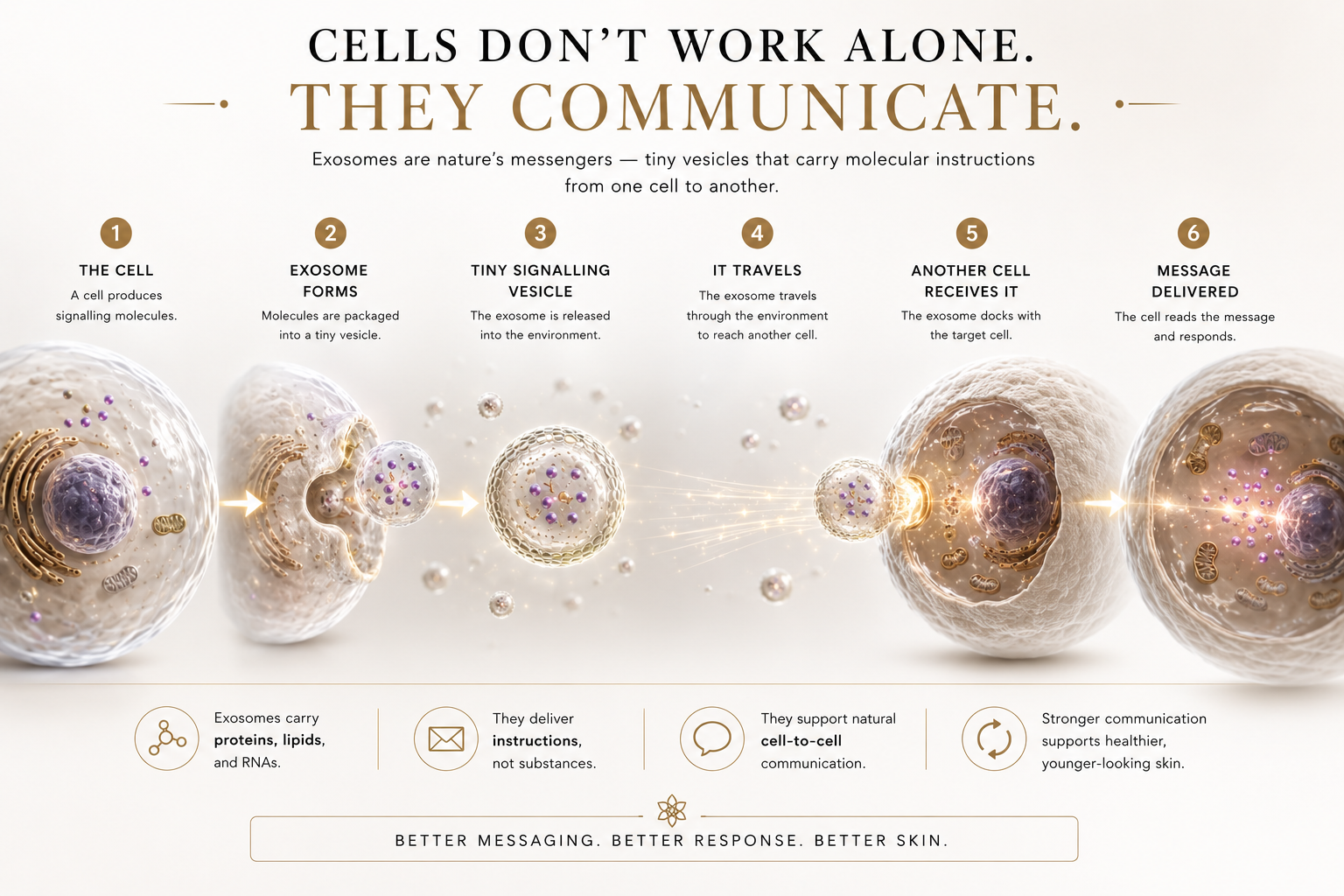
Strip away the marketing and an exosome is a courier.
Cells do not exist in isolation. They speak to one another constantly, and one of the ways they do this is by packaging molecular instructions — proteins, lipids, signalling RNA — inside a tiny membrane-bound vesicle and releasing it. Another cell receives that vesicle and reads its contents. This is cell signalling: the biological conversation that determines whether a fibroblast produces collagen today or does not.
As skin ages, that conversation becomes quieter. Signals degrade. Instructions arrive incomplete. The machinery is intact; the messaging is not. This is why the most interesting frontier in skin longevity is not about adding more raw material to the skin — it is about restoring the clarity of the conversation.
Exosome technology is an attempt to participate in that conversation. Which raises the only question that matters: whose messages are you inviting in?
The Fork in the Road: Two Very Different Sources
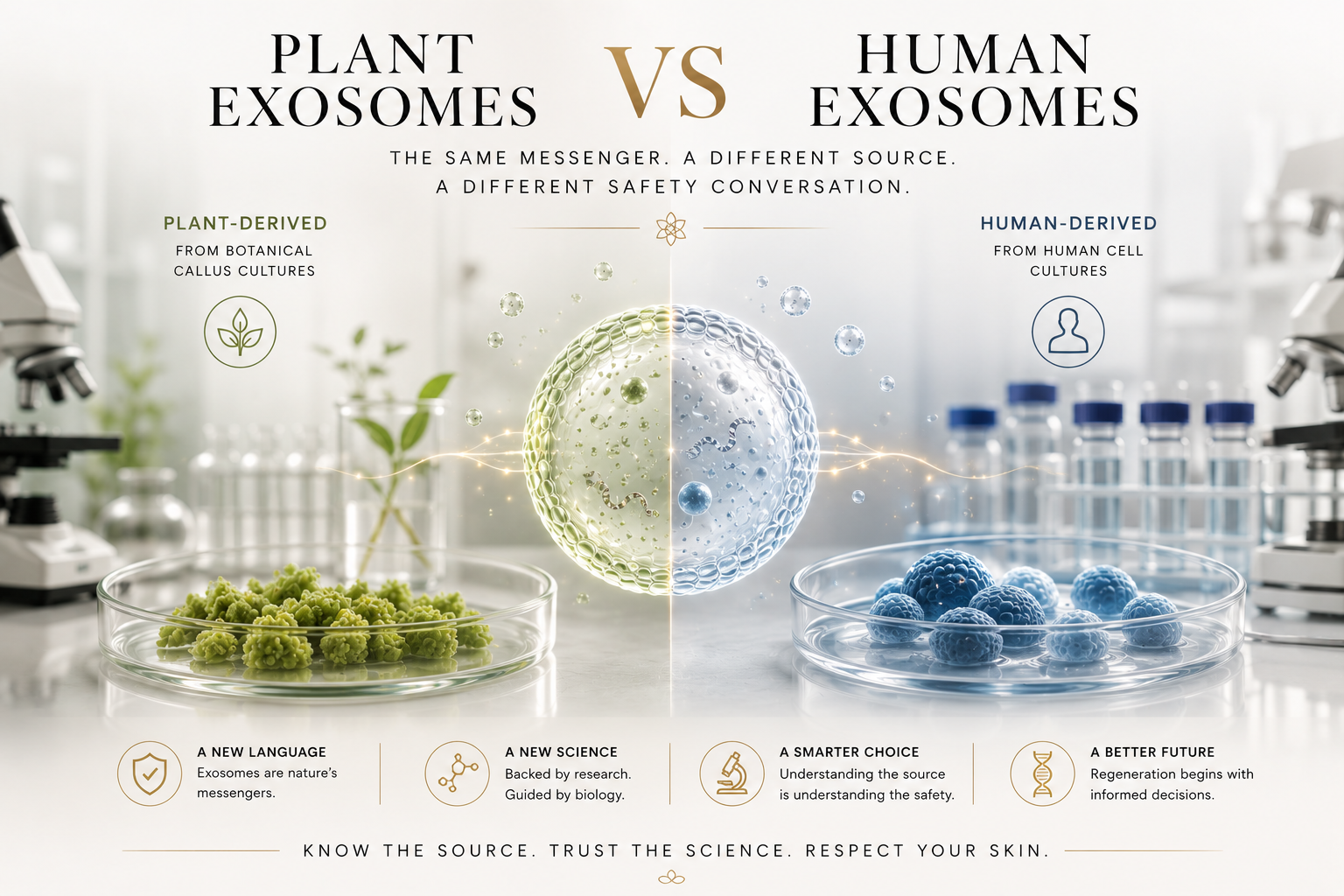
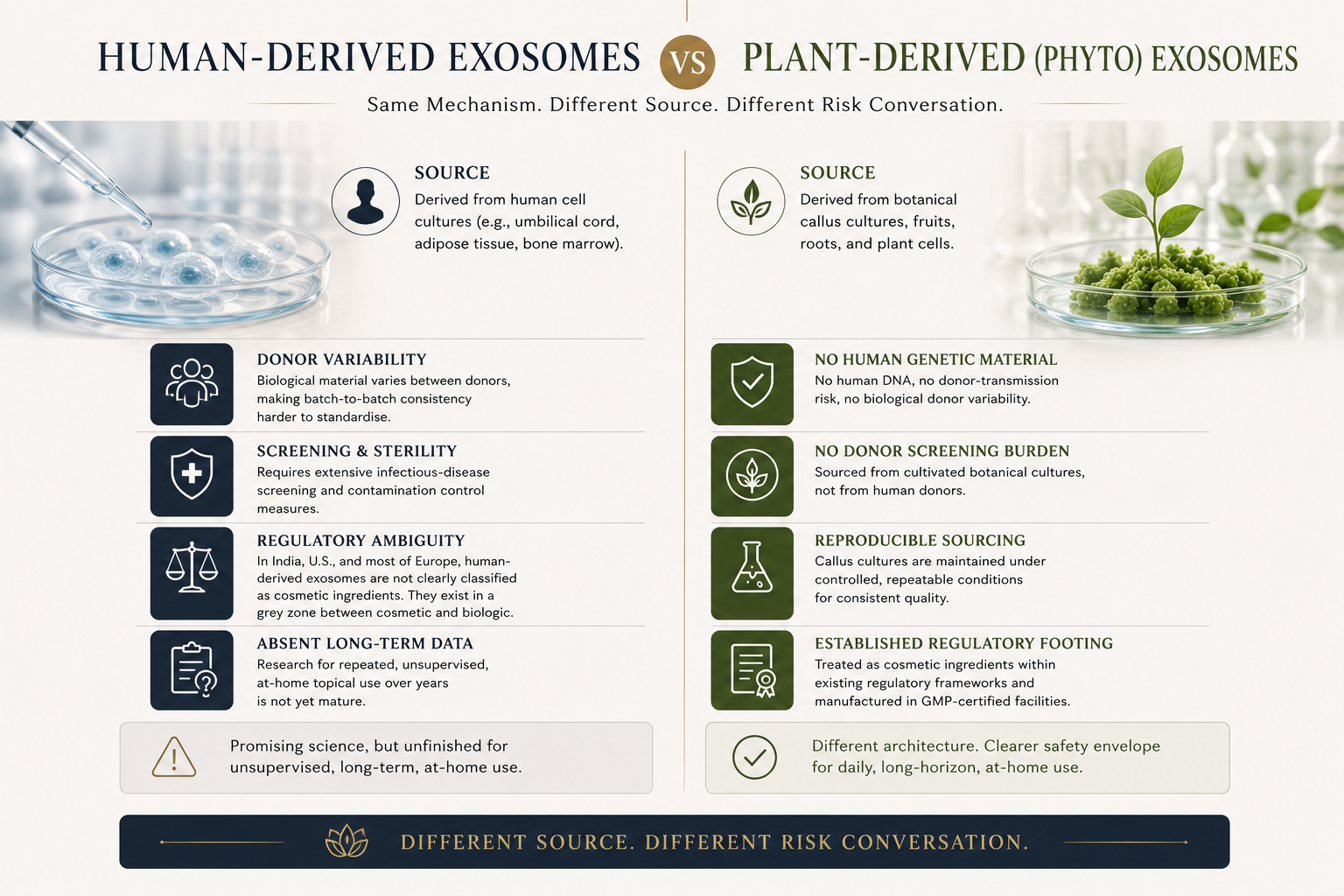
Human-derived exosomes
These are isolated from human cell cultures — typically mesenchymal stem cells sourced from donor tissue such as umbilical cord, adipose tissue, or bone marrow. The scientific interest is real. The clinical literature is genuinely promising, particularly in wound repair research.
The complications are equally real, and they are not about efficacy. They are about everything that surrounds efficacy:
- Donor variability — biological material differs between donors, which makes batch-to-batch consistency difficult to standardise.
- Screening and sterility — any human-sourced material carries the burden of infectious-disease screening and contamination control.
- Regulatory ambiguity — in India, the United States, and most of Europe, human-derived exosome preparations are not straightforwardly classified as cosmetic ingredients. They occupy a grey zone between cosmetic and biologic.
- Absent long-term data — the research base for repeated, unsupervised, at-home topical use over years is not yet mature.
None of this makes human exosomes bad science. It makes them unfinished science. There is a meaningful difference between a technology that is promising in a controlled clinical setting and a technology that is appropriate for a serum on a bathroom shelf, applied nightly, indefinitely, by someone who has never met a physician.
Plant-derived exosomes (phyto-exosomes)
Plants perform the same trick. Botanical cells package signalling molecules into vesicles and release them, and these plant-derived exosomes can be isolated from callus cultures, fruits, and roots.
What changes is the entire risk conversation:
- No human genetic material — and therefore no donor-transmission pathway.
- No donor screening burden — the source is a cultivated botanical culture, not a person.
- Reproducible sourcing — callus cultures can be maintained under controlled, repeatable conditions rather than sampled from varying individuals.
- Established regulatory footing — plant-derived actives are handled within existing cosmetic ingredient frameworks, produced in GMP-certified facilities.
This is not a compromise position. It is a different architecture with a different safety envelope — and for topical, long-horizon, at-home use, it is the architecture that makes sense.
Why “Safe” Is the Wrong Word
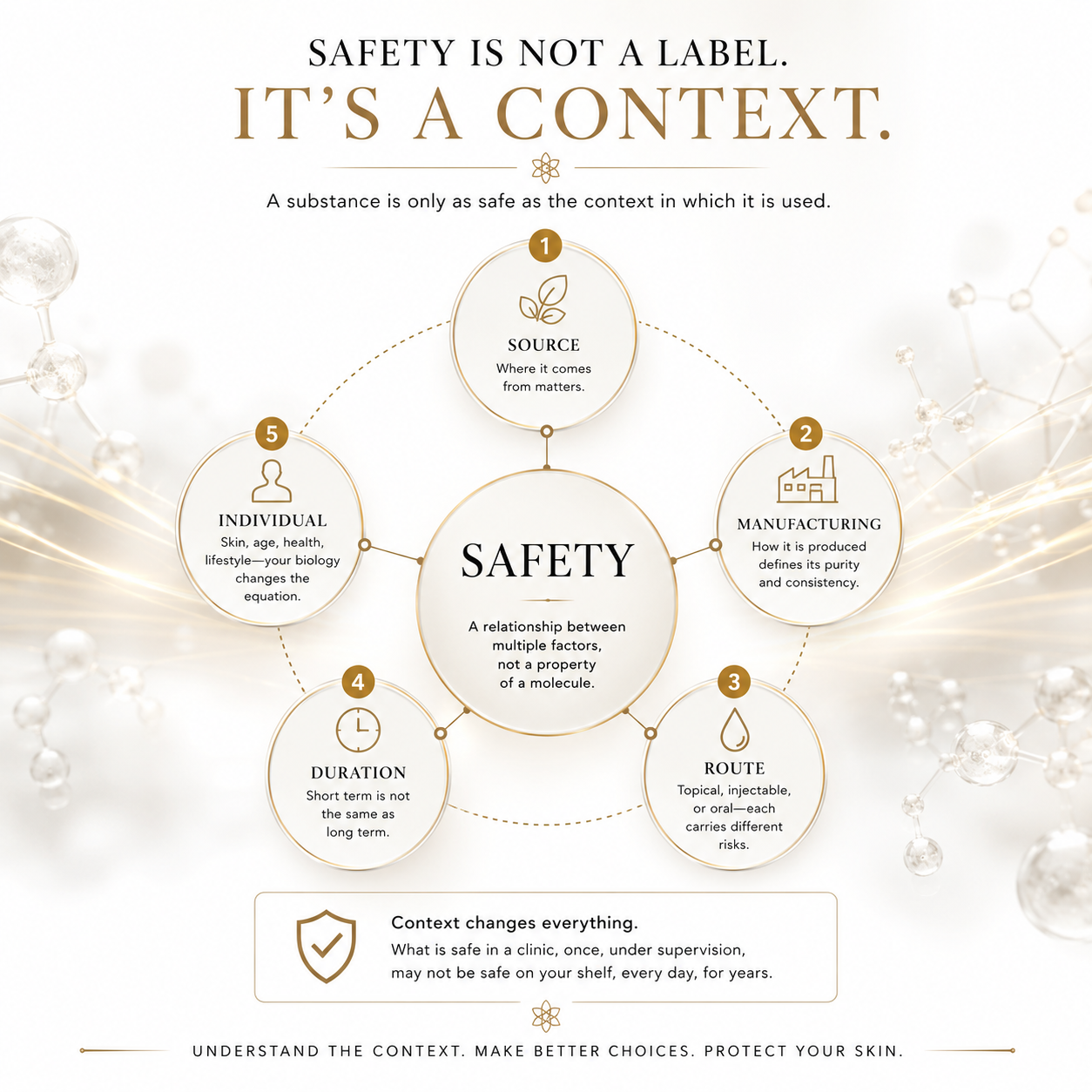
Safety is not a property a molecule possesses. It is a relationship between a substance, a route of administration, a duration of exposure, and a person.
A material may be entirely appropriate under physician supervision, administered once, in a controlled environment — and entirely inappropriate as a nightly ritual practised for a decade without oversight. The molecule has not changed. The context has.
So the honest question is not “are exosomes safe.” It is: is this exosome, from this source, in this format, appropriate for how I intend to use it? For a serum — daily, self-administered, indefinite — the answer that survives clinical scrutiny is the plant-derived one.
What Clinically Studied Ingredients Do and Do Not Promise
A word on language, because language is where this category goes wrong.
Phyto-exosomes are studied for their ability to support the skin’s own signalling environment. Bioactive peptides are studied for their role in supporting collagen-related pathways. These are supportive mechanisms. They help improve the conditions under which skin performs its own repair.
They do not cure. They do not treat disease. They do not guarantee an outcome, because skin is a living system responding to sleep, stress, sun, glycation, and genetics simultaneously — and no serum outranks all of those inputs.
Any brand promising more than that is telling you something about its marketing department, not its formulation.
DOCTOR'S NOTE
In clinical practice, the question I am asked is rarely “is this powerful?” It is “is this appropriate for me?” Those are different questions, and the second one matters more.
Human-derived exosome preparations sit in an unresolved regulatory space in most countries, including India. When a biological material is sourced from human tissue, questions of donor screening, sterility, batch traceability and long-term safety data become central — and at present, those answers are incomplete. That is not a marketing opinion. It is simply where the evidence currently stands.
Plant-derived phyto-exosomes occupy a different position. They carry no human genetic material, no donor-transmission concern, and they are handled as cosmetic ingredients under established manufacturing frameworks. For topical, long-term, at-home use — which is what a serum is — that risk profile is the one I am comfortable placing in a patient’s hands. Regeneration should never require a leap of faith.
— Dr. Samir
How to Read an Exosome Label
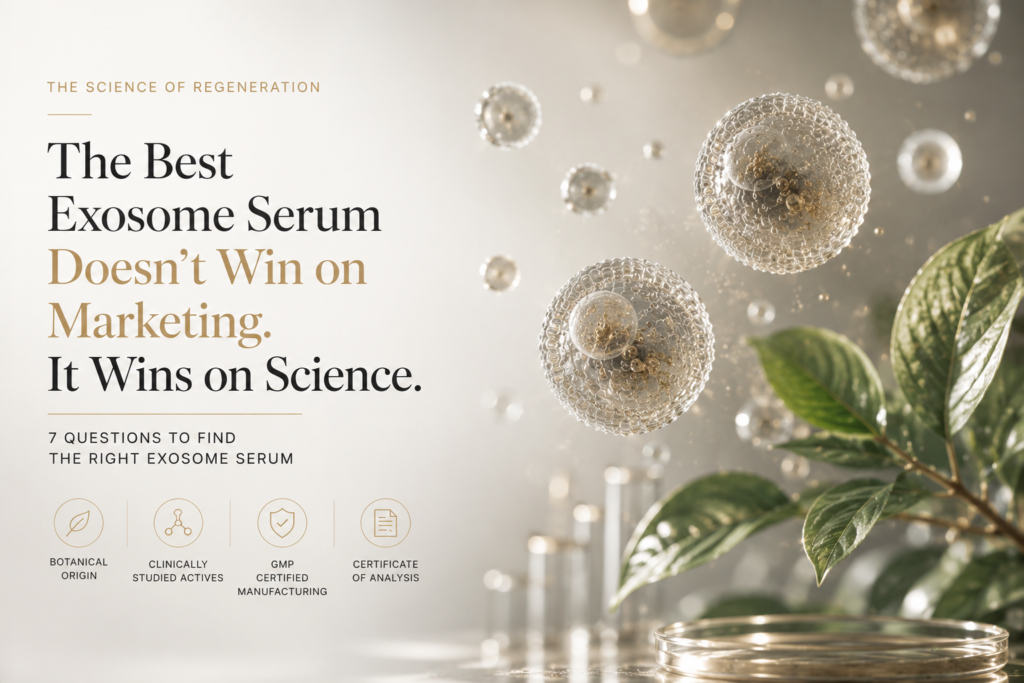
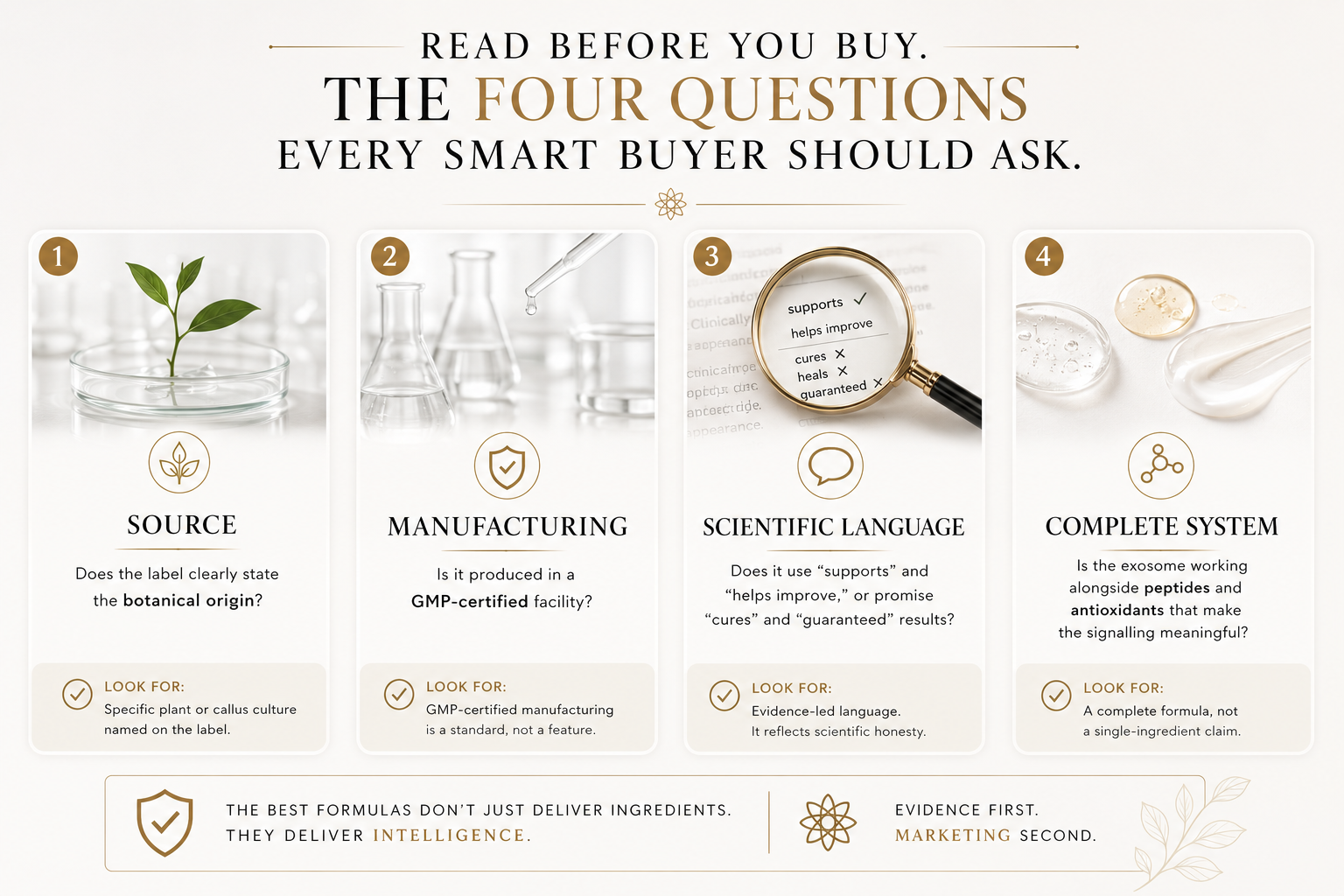
Four questions, before you buy anything in this category:
- Source — does the label name the botanical origin, or does it simply say “exosome”? Vagueness is a decision the brand made on your behalf.
- Manufacturing — is the formulation produced in a GMP-certified facility? This is a floor, not a feature.
- Language — does it say “supports” and “helps improve,” or does it say “cures,” “heals,” “guaranteed”? Regulatory-compliant language is a proxy for scientific honesty.
- System — is the exosome working alone, or alongside peptides and antioxidants that make the signalling meaningful? A courier with nothing to deliver is theatre.
The Serum Built on the Safer Answer
STEMGLOW™ was formulated around a plant-derived phyto-exosome core, paired with bioactive peptides and clinically studied actives, in a GMP-certified facility. It is not designed as a beauty product. It is designed as a clinical-grade active treatment for people who want their skin’s cellular conversation to stay clear — and who would rather not gamble on unresolved regulatory territory to get there.
Regeneration should be evidence-led, not faith-led. That is the whole thesis of the brand, and it is why the source of an exosome is never a footnote.
Explore STEMGLOW™ — The Science of Regeneration.
4. FAQ — PEOPLE ALSO ASK
Are plant exosomes safer than human exosomes?
Plant-derived exosomes carry no human genetic material and no donor-transmission risk, and they sit within established cosmetic ingredient frameworks. For daily topical use, this gives them a clearer and better-defined safety profile.
Are exosomes approved for use in skincare in India?
Plant-derived phyto-exosomes are used as cosmetic ingredients under existing regulatory frameworks. Human-derived exosome preparations remain in an unresolved regulatory category in India and most other markets.
What do exosomes actually do for the skin?
Exosomes act as carriers of cell-signalling molecules. In skincare, phyto-exosomes are studied for their ability to support the skin’s own communication and renewal processes rather than forcing visible change.
Can I use an exosome serum every day?
Plant-derived exosome serums are formulated for daily topical use. As with any active treatment, introduce it gradually and consult a physician if you have reactive or compromised skin.
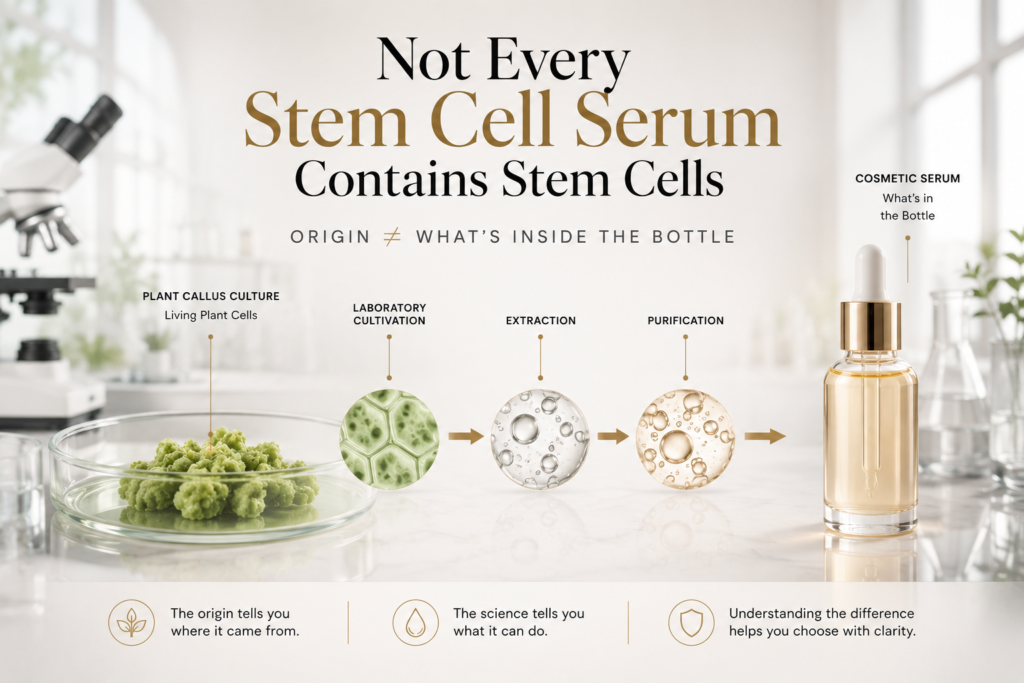
Are exosomes the same as stem cells?
No. Stem cells are living cells. Exosomes are vesicles released by cells that carry signalling molecules. An exosome serum contains messengers, not cells.
9. Excessive Heat and Chemical Damage
Frequent use of:
- Hair straighteners
- Hair dryers on high heat
- Bleaching
- Perming
- Harsh chemical treatments
can weaken the hair shaft, increasing breakage and giving the appearance of hair loss.
Using gentle hair care practices helps minimize damage.
10. Aging
As men age, hair follicles naturally produce finer, slower-growing hairs. Hair density decreases, and the growth phase shortens.
Although aging cannot be prevented, maintaining scalp health, good nutrition, and healthy lifestyle habits may help preserve hair quality.
When Should You See a Doctor?
Seek professional evaluation if you notice:
- Sudden severe hair loss
- Bald patches
- Scalp pain or swelling
- Hair loss with weight changes or fatigue
- Hair shedding lasting longer than six months
- Hair loss after starting a new medication
Early assessment often improves treatment options.
Frequently Asked Questions
Is losing hair every day normal?
Yes. Shedding around 50–100 hairs daily is considered normal.
Can stress cause permanent hair loss?
Stress-related shedding is often temporary, but prolonged stress can worsen underlying androgenetic alopecia.
Does wearing a cap cause baldness?
No. Wearing a clean, properly fitting cap does not cause male pattern baldness.
Can diet improve hair growth?
A nutrient-rich diet supports healthy hair, especially if deficiencies are present.
Is dandruff responsible for hair loss?
Dandruff itself doesn’t directly cause baldness, but severe inflammation and scratching can increase temporary shedding.
Key Takeaways
Hair fall in men is usually caused by one or more factors rather than a single issue. Genetics remains the leading cause, but stress, nutrition, scalp health, hormones, medications, and lifestyle choices all influence hair growth.
The sooner the underlying cause is identified, the greater the opportunity to slow progression and support healthier hair.
If your hair loss is persistent, rapidly worsening, or associated with other symptoms, consult a qualified healthcare professional for a personalized evaluation.
Suggested SEO Keywords:
hair fall in men, causes of hair fall in men, male hair loss, male pattern baldness, androgenetic alopecia, DHT hair loss, hair thinning in men, why am I losing hair, hair regrowth, healthy hair growth, stress hair loss, vitamin deficiency hair loss, scalp health, hair care for men.
Suggested Internal Links:
- Hair Growth Cycle Explained
- Baicapil®: How It Supports Hair Growth
- Hair Serum vs Hair Oil
- Stress and Hair Loss
- Best Nutrients for Healthy Hair