

Regenerative Skincare vs Traditional Skincare: What’s the Difference?
Introduction
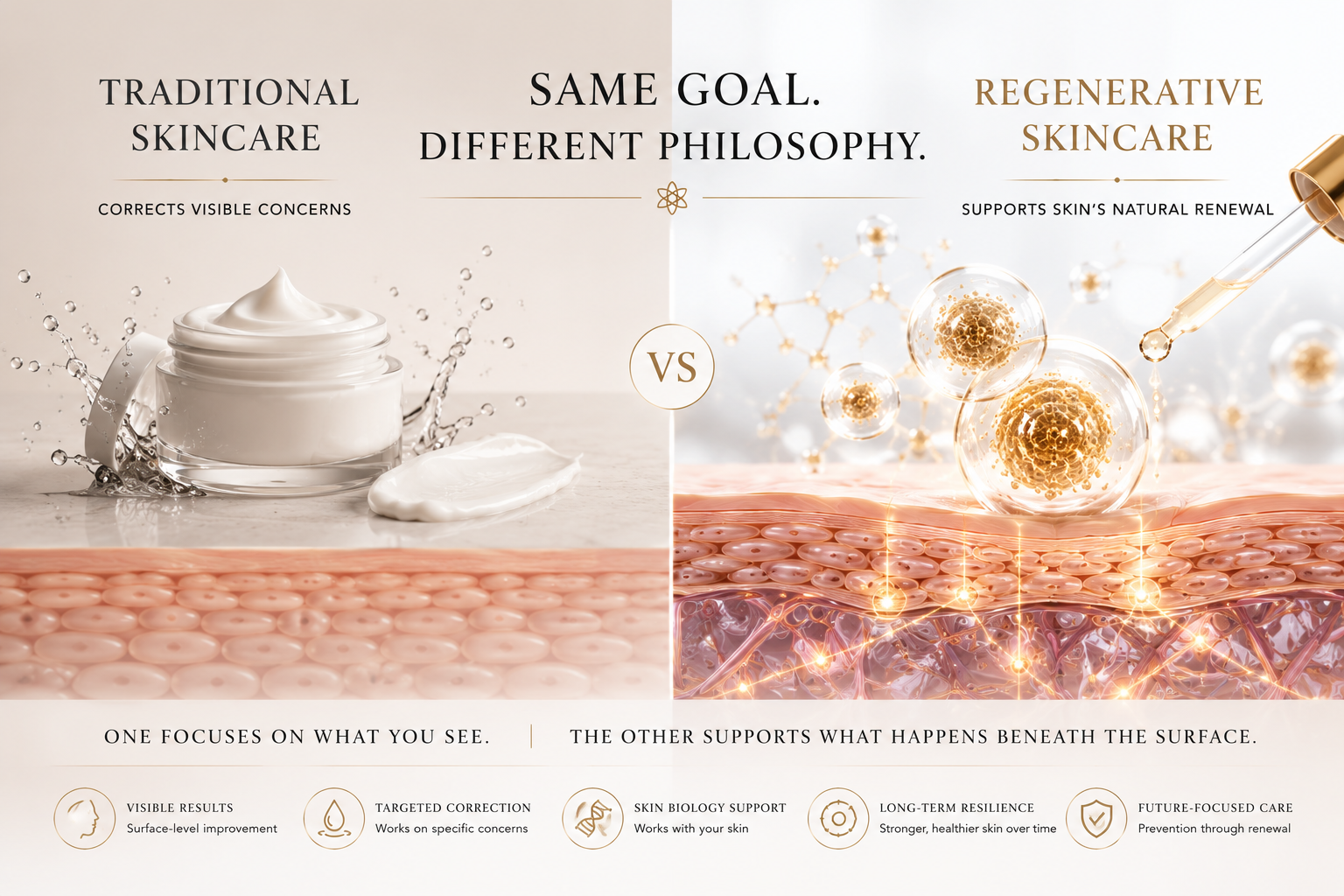
For decades, skincare has focused on cleansing, moisturizing, and correcting visible concerns. Today, regenerative skincare represents a new approach that aims to support the skin’s natural renewal processes. Rather than simply masking signs of damage, it emphasizes maintaining healthier-looking skin over time.
What Is Traditional Skincare?
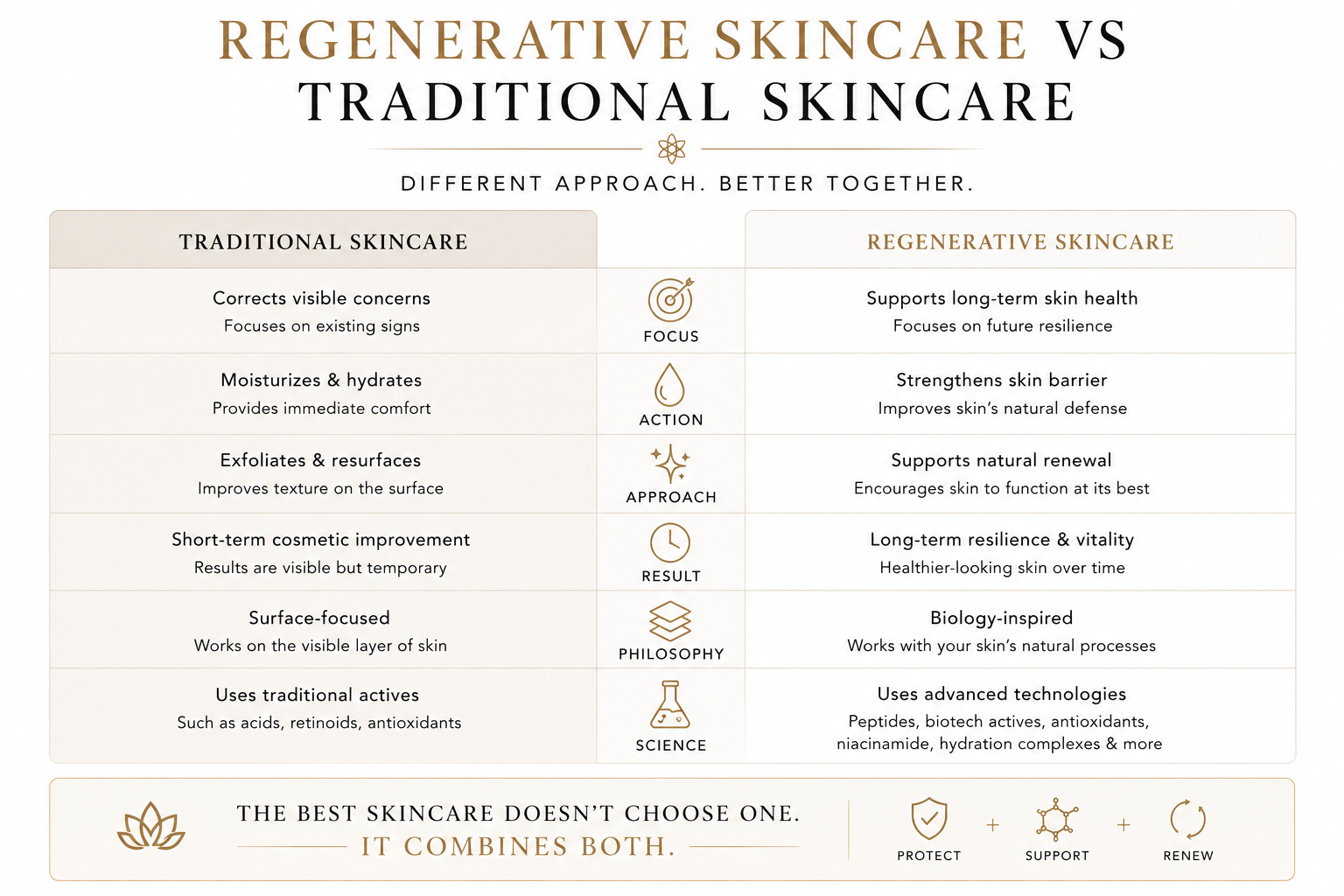
Traditional skincare primarily targets visible concerns such as dryness, acne, pigmentation, or fine lines. Common ingredients include moisturizers, exfoliating acids, retinoids, and antioxidants. These products can be highly effective when chosen appropriately.
What Is Regenerative Skincare?
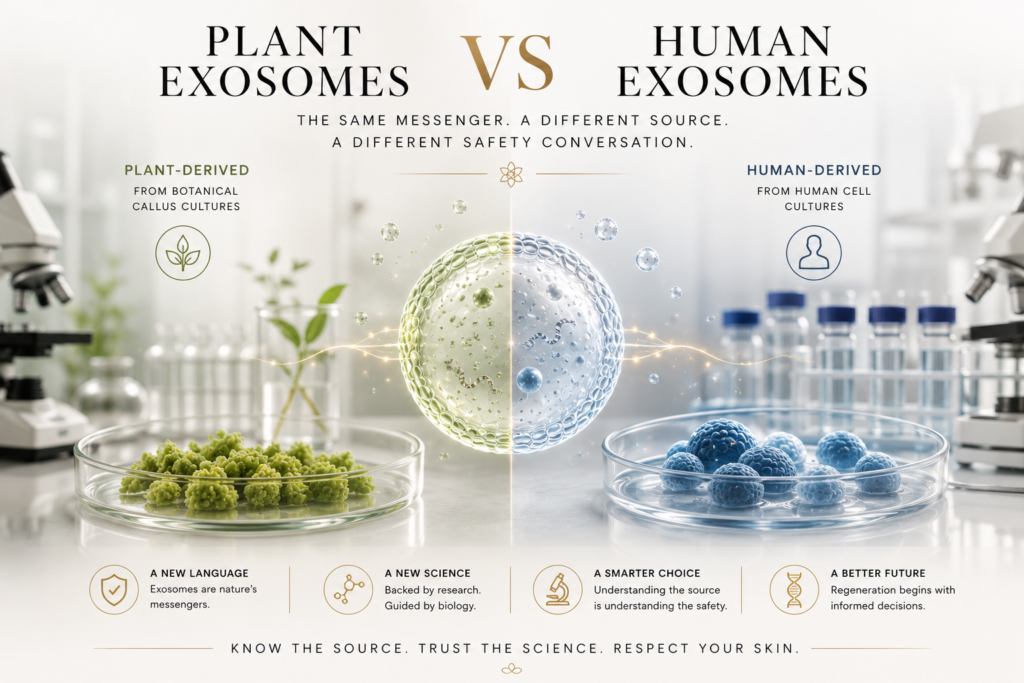
Regenerative skincare focuses on supporting the skin’s natural biology using advanced cosmetic technologies. Modern formulations may include peptides, plant-derived biotechnology ingredients, antioxidants, niacinamide, hydration complexes, and other science-backed ingredients designed to promote healthier-looking skin.
Key Differences
Traditional skincare often concentrates on correcting visible symptoms, while regenerative skincare emphasizes long-term skin resilience, barrier support, hydration, and overall skin health. The two approaches can complement each other in a well-designed skincare routine.
Who Can Benefit?
People concerned about early signs of aging, environmental stress, uneven skin tone, dehydration, or weakened skin barriers may benefit from a regenerative skincare approach alongside healthy lifestyle habits.
Building a Regenerative Routine
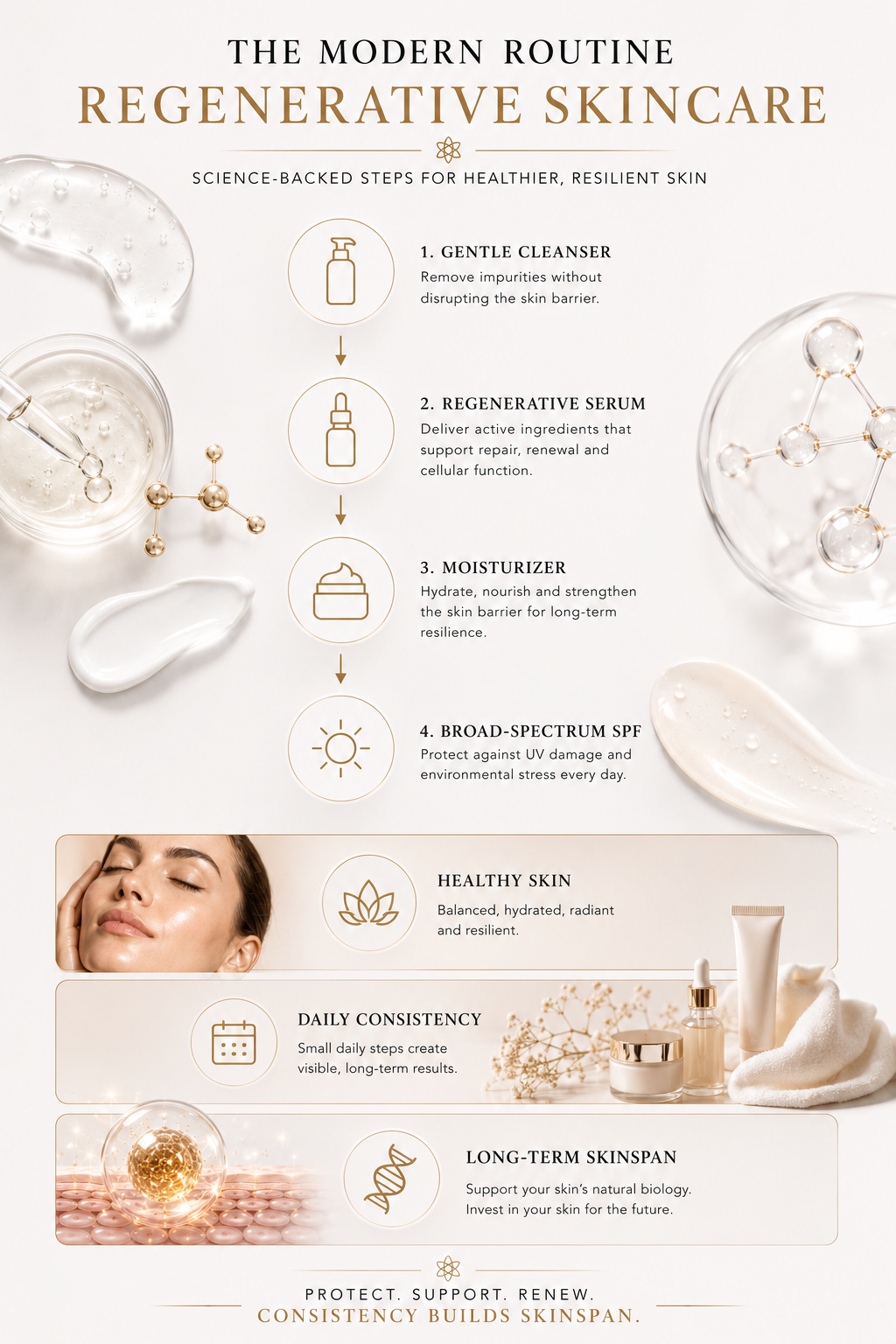
A gentle cleanser, science-backed serum, moisturizer, and daily broad-spectrum sunscreen remain the foundation of an effective skincare routine. Consistency is more important than using many products.
Doctor's Note
Cosmetic skincare supports the appearance of healthy skin but does not replace professional medical advice or treatment. Persistent skin conditions should be evaluated by a qualified dermatologist.
Conclusion
Regenerative skincare represents an exciting evolution in cosmetic science. By combining evidence-based ingredients with daily skin protection, individuals can support healthier-looking, more resilient skin over time.
Frequently Asked Questions
- Can regenerative skincare replace traditional skincare?
No. Regenerative skincare complements traditional skincare rather than replacing it.
- Is regenerative skincare only for mature skin?
No. Adults of different ages may choose regenerative skincare to support healthy-looking skin.
- Which ingredients are commonly used?
Peptides, niacinamide, antioxidants, ceramides, hydrating ingredients, and other biotechnology-inspired cosmetic ingredients are commonly included.